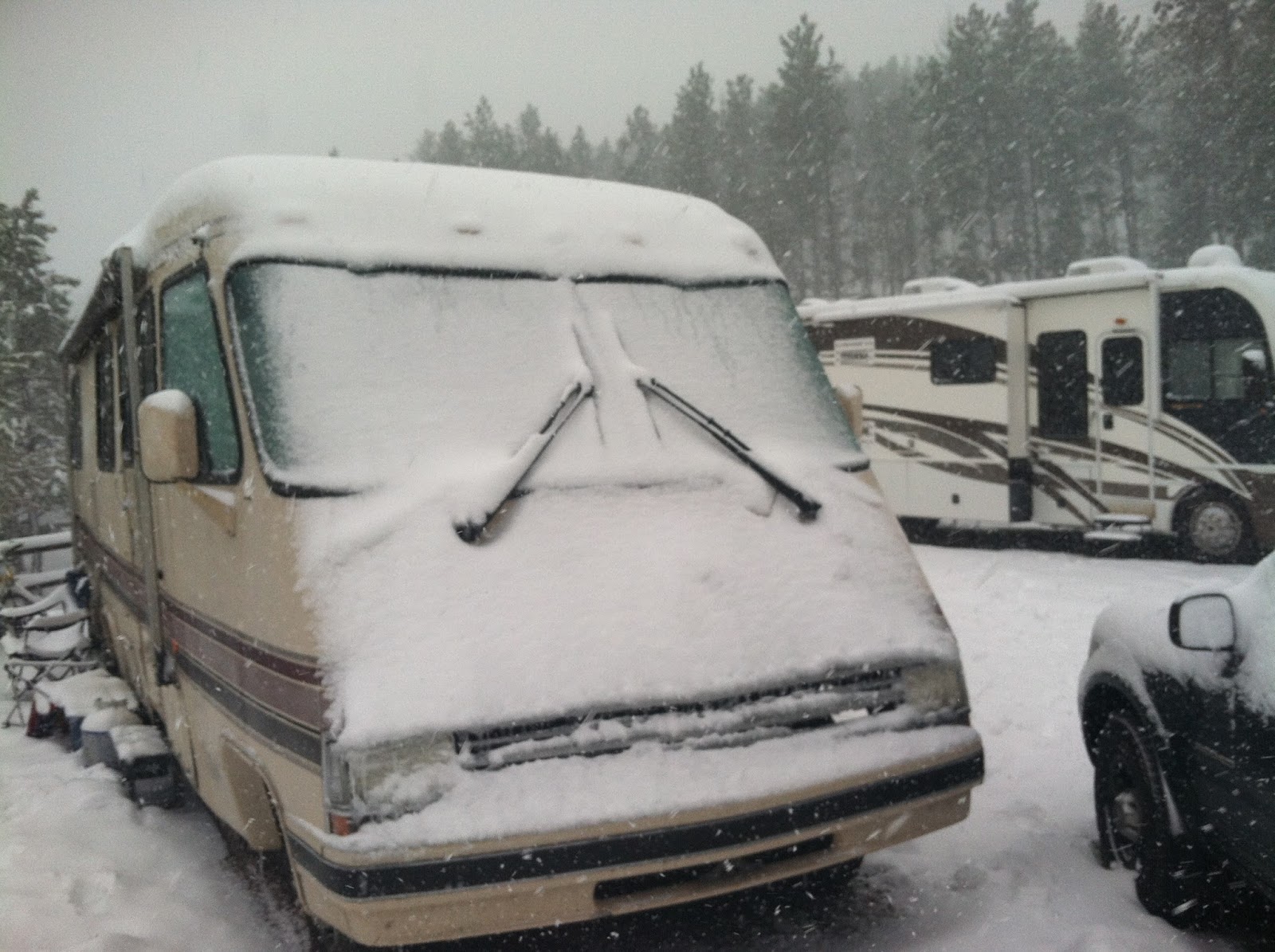
Tuesday, May 31, 2016

5 Ways to Buy Local While You Travel

Five tips for buying local food and products while you travel - great tips for RVers and travelers looking to support local economies - tips from Heidi Raki of RVing with the Rakis


As a family we try to buy locally no matter where we are. This is much easier when we are stable for longer periods of time like we have been in Albuquerque since January. Now that we have hit the road again for the next nine weeks, we have be slightly more creative when trying to support local business and farmers. It’s really easy to slip into buying from big box stores that are convenient, but not always great for the economy or the environment of the places we are visiting. So, how do we buy locally while we’re on the road? Here are a few ways:

1.) Find the local farmer’s markets – Most areas have weekly farmers markets, especially in the summer. A simple google search for “farmer’s markets in (whatever city you're in)” will generally give you a list of markets, as well as times and locations. We also try to stop at roadside stands whenever we see them.

2.) Check Craigslist – Farmers who sell local eggs and local honey often advertise on craigslist. They will often meet you out somewhere or you can pick things up at their location if you’re comfortable with that.

3.) Scour the bulletin boards at local haunts – Small supermarkets, laundry mats and restaurants often have bulletin boards where locals can post small advertisements for goods, services and events. This is especially true in smaller towns. We have used these boards to find eggs for sale, weekly farmer’s markets and even craft fairs.
4.) Ask the locals – I used to watch Rachel Ray’s $40 a Day and one of her biggest tips was always to ask a local where the best restaurants are. This is a tip we have used not only for restaurants, but also for farmer’s markets, things to do, and pretty much anything that we might want or need while we’re in an area. If you want to support local, ask the locals!

5.) Harvest Hosts – This trip we have added a new method of finding local farmers to support. Another fulltime RVer referred us to Harvest Hosts, which is a network of farms and wineries that will allow you to stay a night or two on their property (in your RV) for free. These are mainly dry camping opportunities, but the program allows you to find plenty of farms you would have never found otherwise. The membership fee for the program is only $45 a year and then you are asked to purchase something at each farm you stay at, which is kind of the point for us. Our first Harvest Host stay was at an alpaca farm and it was so cool that it deserves its own blog post, so come back in a few days and I’ll post pictures and a description of that fun night!


Do you have any tricks for buying local while you’re traveling? I’d love it if you shared your tips in the comments. It’s great when we all learn from each other!


Monday, February 15, 2016

Our Family's Compromise

Why our fulltime rving family made a compromise and decided to become a part time traveling family - RVing with the Rakis

Since October, my family has talked about how long we will continue this lifestyle. My husband and I would like to continue roaming and traveling, but the boys, while they love traveling, miss having a set group of friends that they see regularly. In each place we have visited they have made friends and continue to e-mail with many of these friends, but it's not the same as seeing the same friends day after day and building relationships that way. After many family conversations and really listening to their concerns, we accepted a job in Albuquerque with the plan of being here until September. However, the job wasn't a good fit for us and we left after a month. At that point, we had to take a step back and decide what we wanted to do. We knew life would have to change to stay stable and a compromise would have to be made, but we weren't sure exactly what that would look like. Our considerations were:

1.) Staying still in one place during the school year so that my oldest could attend "real" school because he misses social learning

2.) Staying still long enough for the two younger homeschooled boys to do activities and build friendships

3.) Having time and money to travel frequently, if not all the time

4.) Saving money to be able to continue working on paying off our student loan debt

After some brainstorming, a compromise began to emerge. The key for our family's compromise is for me to go back to teaching (I taught in a classroom for 9 years before we began this lifestyle.) and for my husband to take over homeschooling the younger two boys while building his online businesses. (He has both a Teachers Pay Teachers store for language resources and an Etsy store called Raki's Redeux for repurposed goods.) By taking on a teaching position, while my husband stays home, we can have enough money for student loans and travel. (Our main monthly living expenses are still covered by my Teachers Pay Teachers store and teacher resource blog.) 

This compromise also allows us to the ability to travel during ALL school breaks. So our goal will be to travel for Christmas break, Spring break and pretty much all summer long. We will continue to live in our RV, which confuses some people. But if we moved into an apartment or a house we would need to continue to pay rent and utilities during the times that we are traveling, which will not be the case at an RV park. We would also need to furnish the new place, which would take a lot of set up money. Plus, we like our "home". It may not be everybody's cup of tea, but we really enjoy living in our RV, and we especially like having our "home" with us when we travel. 

So, will this compromise change this blog? Not really, at least not right now. 
We are still new to the Albuquerque area, which we have found we really like. So we will still share pictures of our adventures, which will be happening mainly on weekends and breaks. 
We will still be living in our RV. So we will share hacks and strategies to living in an RV that will be just as pertinent if we were traveling every week.
My younger two sons will continue to homeschool. So we will continue to share activities and tips that have worked for us in our homeschool "classroom".

Now you might be asking yourself, well why did you even feel the need to share this information on the blog? I am doing so for many reasons. Reason number one reason is this blog is about our life and this is a major life change for us. However, I also wanted to share this because I know it's easy to get set into the mindset of "This is our life and it may not change." This idea is big in "normal" lifestyles, but it can be a part of the RV lifestyle too, especially because when living in an RV you often spend a good amount of time defending your lifestyle. So you start to think "If I change my lifestyle, I was being hypocritical all those times I told everybody how amazing our lifestyle is." But if life has taught me anything it's that life often changes at a moment's notice. Althought we may not WANT it to change, life happens. And the beauty of our lifestyle is we are able to embrace change and make compromises a bit easier than if we were tied to a mortaged house in the suburbs. 

I hope you will continue to follow our adventures here at RVing with the Rakis. Have a wonderful day!

Sunday, January 3, 2016

A Look Back at Our Year Without Rent


How a family of five lived on $380 a year in rent and utilities - Find out how we did it at RVing with the Rakis.


At the beginning of January 2015, I posted about our plan to live rent free for a year. Now that the year has passed, I felt it was time for an update.
We started out last year WWOOFing on farms. While we were staying on the farms, we were completely rent free, and had some help with the grocery bill as well! After the great experiences at Thus Far Farm and Earthen Heart, we headed west to Crooked Creek Campground in South Dakota. While we were there, we also paid no rent, and we earned a salary, plus we had delicious free pancakes every morning. After South Dakota, we headed south to Texas where Amazon paid our rent (at a KOA campground) for three months.

So until a week ago, our rent was paid every day except for those in between jobs. In between each of our stops, we spent between eight days and two weeks on the road. The majority of those nights we spent “boondocking” – staying in parking lots or rest areas. However, we also enjoyed a few nights at state parks and we had a great time at a campground in Ohio with an indoor pool for Easter. Total, we spent no more than $200 on campgrounds while we were traveling. Now, we also paid $180 for the week of Christmas and New Years because Amazon stopped paying for our campsite on Christmas day and we decided to stay put for the holidays. Either way, I’d say that $380 of rent is still a good total for the year, especially when that also included our water, electricity, television and most of our internet.

Thanks to our lack of rent, we were able to pay off three of our student loans totaling over $9,000 this year. We were also able to put an additional $4,000 away in savings. Plus, we saw and did a ton of things like these:

We hiked waterfalls.
How a family of five lived on $380 a year in rent and utilities - Find out how we did it at RVing with the Rakis.

We climbed sand dunes.
How a family of five lived on $380 a year in rent and utilities - Find out how we did it at RVing with the Rakis.

We played on the shores of Lake Michigan.
How a family of five lived on $380 a year in rent and utilities - Find out how we did it at RVing with the Rakis.

We explored museums.
How a family of five lived on $380 a year in rent and utilities - Find out how we did it at RVing with the Rakis.


We visited wineries.
How a family of five lived on $380 a year in rent and utilities - Find out how we did it at RVing with the Rakis.


We visited nine national parks or monuments and countless state parks.
How a family of five lived on $380 a year in rent and utilities - Find out how we did it at RVing with the Rakis.


We explored caves.
How a family of five lived on $380 a year in rent and utilities - Find out how we did it at RVing with the Rakis.

We camped on the beach.
How a family of five lived on $380 a year in rent and utilities - Find out how we did it at RVing with the Rakis.

We experienced many different types of weather.
How a family of five lived on $380 a year in rent and utilities - Find out how we did it at RVing with the Rakis.

 We ate at local restaurants.
How a family of five lived on $380 a year in rent and utilities - Find out how we did it at RVing with the Rakis.

We experienced four different library systems, and the amazing programs that they offer.

How a family of five lived on $380 a year in rent and utilities - Find out how we did it at RVing with the Rakis.


We were interviewed by a fellow blogger.


We visited with friends and family.

We met amazing people.

We made memories.

Now that our first year of RVing is complete, I’m sure you’re asking what’s on the plan for next year? Well as amazing as this year was, my sons are dreaming of continuity of friends, ie staying still for awhile. So we’ve taken a position just north of Albuquerque at a campground from January – September. After this we still aren’t sure, but it definitely looks like we’re going to have another rent free year!


Monday, December 21, 2015

Storing a Month’s Worth of Food in an RV

Storing a month's worth of food for a family of five in a thirty foot rv. RVing with the RakisLiving in an RV with limited storage, you have to prioritize what you have space for and what you don’t. With three growing boys, food storage is high on our priority list. Big grocery store trips happen once a month in order to cut down on impulse buys. Although we do have to restock on milk, eggs, cheese and fresh fruits and vegetables at least once a week, we stock up on dried and frozen goods so we don’t have as many trips to the grocery store.

In order to understand the food we buy, you should know something about the meals we eat. I cook two to three meals every day. Dinner is almost always home cooked, as close to from scratch as I can get it. Lunch is sometimes home cooked, sometimes “quick fix” like frozen raviolis or hot dogs and baked beans. And sometimes we have leftovers for lunch, although lately we haven’t had much leftovers as the boys eat more and more at each meal. Breakfast is home cooked at least twice a week: pancakes, waffles, biscuits, etc. The rest of the time we eat cereal, oatmeal, or peanut butter sandwiches.  In between meals my kids snack, a lot. I try to keep the snacks healthy - pretzles, fruit, etc. but we also do homebaked cookies, homemade granola bars, and I have one who likes to eat up our leftovers for snacks. 

For dinners, I plan out our meals 5 weeks ahead of time using a chart like this:

Meal planning and storing a month's worth of food for a family of five in a thirty foot rv. RVing with the Rakis

This helps to make sure we have variety in our meals, and I can balance how many meals we are eating that contain meat or beans or cheese or whatnot. I use the meal plan to plan my grocery list so that I'm not buying things I don't need. This saves on storage and on money! We spend about $500 a month on food.

Once I make the list, we do big grocery shopping and bring home the food to store. This was much easier when we were in a house or apartment, but we have made it work well in our RV by being creative and prioritizing food storage as needing more space than other things.

So, where do I put all of the food I buy? Well my husband has done a bunch of work to make sure that we had enough room for the amount of food we need. He has removed drawers, built shelves, added doors and more.

Here’s a peek at our food storage:


We have a regular RV fridge which holds quite a bit of food, although it's not very deep. It has a freezer attached to the top which is where we store vegetables, butter, broths and anything non-meat that needs to be stored.

Storing a month's worth of food for a family of five in a thirty foot rv. RVing with the Rakis

Storing a month's worth of food for a family of five in a thirty foot rv. RVing with the Rakis


My husband installed an extra mini fridge that is dedicated to meat. We fill it once a month, and usually have some meat left at the end of the month since we only eat meat two to three times a week.

Storing a month's worth of food for a family of five in a thirty foot rv. RVing with the Rakis


Underneath the regular RV fridge, my husband removed a drawer and opened up a storage space which he just added doors too. This gives us room for potatoes, onions, cooking oil, extra boxed items and the all important wine. (We collect local wines in the different places we visit. So far Michigan held our favorite wines, but that's a whole seperate post!)

Storing a month's worth of food for a family of five in a thirty foot rv. RVing with the Rakis


Next to the refrigerator was once a closet. When we bought the RV, my husband took out the hanging bar and added shelves, making me a pantry with three deep shelves. The shelves are so deep that we have a box in the back of the bottom one to hold canned goods.

Storing a month's worth of food for a family of five in a thirty foot rv. RVing with the Rakis


Under the pantry was once two drawers. My husband took out the bottom drawer and realized there was a lot of extra space underneath it. So he took out some paneling and built me two additional shelves with a door. On these two deep shelves, we use large totes to store beans, four and rice. My flour and rice containers can each hold about 20 pounds of material, giving me plenty of room to stock up. 

Storing a month's worth of food for a family of five in a thirty foot rv. RVing with the Rakis

Storing a month's worth of food for a family of five in a thirty foot rv. RVing with the Rakis


Above my stove was once a microwave. When we had been in the RV for two months we realized that we had only used the microwave one time and that it was taking up a lot of space. So my husband removed it and built doors and added an additional shelf to make more storage space. The top shelf holds canning jars and kitchen towels. The bottom shelf holds common cooking and baking needs like baking powder, yeast, powdered milk, salt and pepper.

Storing a month's worth of food for a family of five in a thirty foot rv. RVing with the Rakis


Spices were a huge space issue for us. We tried multiple solutions and eventually my husband built me a spice cabinet with three shelves and a door. The cabinet is right next to the stove, so it is very convenient for cooking.

Storing a month's worth of food for a family of five in a thirty foot rv. RVing with the Rakis


So that is how we store a month's worth of food in our 30 foot Class A RV with no slides. I showcased this storage in our interview and RV tour with Follow the Hearts, so feel free to check out that video too.